

Evolución del euro frente al peso colombiano
📈 Descubre cómo evoluciona el euro frente al peso colombiano, factores clave, estrategias para manejar riesgos cambiarios y tomar decisiones acertadas en Colombia.
Editado por
María Fernanda Ruiz
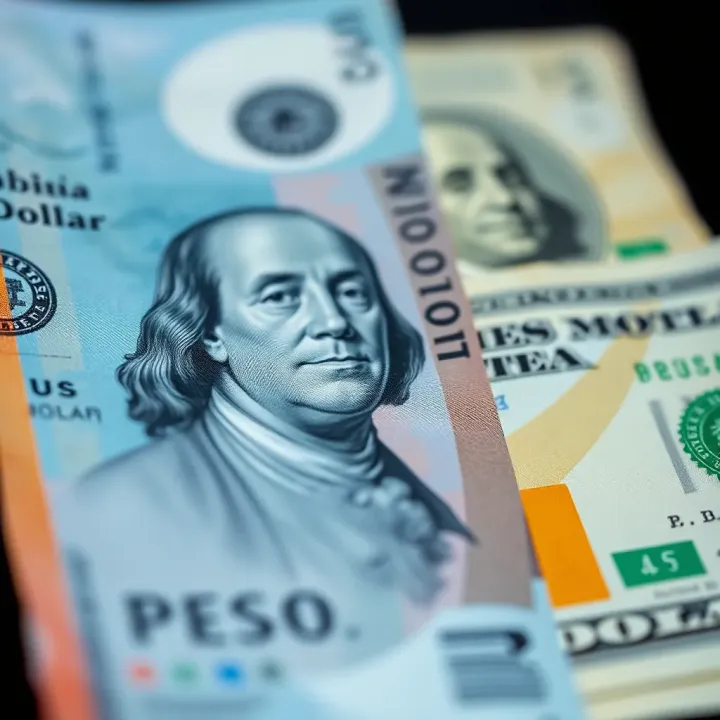
Converting Colombian Pesos (COP) to US Dollars (USD) involves understanding current exchange rates and knowing where to find reliable pricing. The exchange rate tells you how much one currency is worth in another. For example, if the rate is 4,000 COP to $1 USD, every 4,000 Colombian Pesos equals 1 US dollar.
Exchange rates fluctuate constantly due to market demand, geopolitical events, and economic data from both Colombia and the United States. Traders and investors closely watch these changes as they can impact investment decisions and cash flow.

Reliable sources include:
Banks and financial institutions
Currency exchange platforms like XE or OANDA
Official publications from central banks such as Banco de la República de Colombia and the US Federal Reserve
Using real-time data helps you avoid outdated or inaccurate conversions. It’s smart to cross-check rates when making major financial moves.
Say you want to convert $10,000 to COP. If the current rate is 4,200 COP/USD, multiply 10,000 by 4,200:
10,000 USD * 4,200 COP/USD = 42,000,000 COP
This means you’ll get 42 million Colombian Pesos for $10,000.

On the flip side, if you have 50 million COP and want to know its USD value at the same rate, divide 50,000,000 by 4,200:
50,000,000 COP / 4,200 COP/USD = 11,904.76 USD
You would have roughly $11,905.

### Important Factors Affecting Conversion

- **Currency volatility:** Sudden political changes or economic reports can swing rates quickly.
- **Transaction fees:** Banks or exchange services might charge flat or percentage fees that affect final figures.
- **Market hours:** Forex markets don’t operate 24/7, so rates might be stale outside trading times.

> Always factor in fees and timing when converting for business or investment to avoid getting burned.

### Quick Tips

- Use financial platforms with live rate updates.
- Avoid converting large sums on whim; small rate differences add up.
- Keep an eye on economic indicators like inflation rates, interest announcements, and trade balances as they shape currency strength.

Understanding these basics lets you convert [Colombian](/articles/opciones-q-conceptos-usos-practicos-colombia/) Pesos to US Dollars with confidence, helping you protect your assets and make smarter finance decisions.

## Understanding the Basics of Currency Conversion

Understanding the basics of currency conversion is key when navigating international finance, especially between the Colombian [Peso](/articles/evolucion-euro-peso-colombiano/) (COP) and the US Dollar (USD). It lets you make accurate calculations, avoid costly mistakes, and grasp how external factors influence the value you get when exchanging money. For investors, traders, and financial professionals, knowing what's behind these numbers means making informed decisions rather than guessing.

### What Is the Colombian Peso?

The Colombian Peso has a long history tied to Colombia's economic development. Introduced officially in the 19th century, the peso replaced earlier currencies to unify Colombia’s monetary system. Over the decades, it has reflected the country’s economic ups and downs, including periods of inflation and stabilization efforts by the Colombian government.

Today, the peso remains the official currency of Colombia. It's divided into 100 smaller units called centavos, though inflation has rendered these less practical in everyday use. Denominations vary from coins of 50, 100, 200, 500, and 1,000 pesos, to banknotes featuring 1,000, 2,000, 5,000, 10,000, 20,000, and 50,000. For anyone dealing in COP, knowing these helps you recognize your money’s value clearly and avoid confusion during conversions.

### What Determines the US Dollar Value?

The value of the US Dollar mainly hinges on supply and demand factors in global currency markets. When the demand for USD rises—due to its use in trade, investment, or as a reserve currency—its value strengthens. Conversely, if fewer investors want dollars, or if the US prints more money, the value tends to drop. This supply-demand relationship constantly shifts with market sentiment and economic news.

Economic indicators also play a massive role. Metrics like the US unemployment rate, inflation, GDP growth, and Federal Reserve interest rate decisions directly affect the dollar’s strength. For instance, when the Fed raises interest rates, the USD usually gains against other currencies because investors get better returns. Knowing these indicators means you can anticipate price swings and time your currency conversions more smartly.

> Grasping these basics gives you a solid foundation for understanding how the Colombian Peso compares to the US Dollar. It’s not just about numbers but the forces shaping those numbers daily.

## How Exchange Rates Work Between COP and USD

Understanding how exchange rates between the Colombian peso (COP) and the US dollar (USD) work is essential for investors, traders, and financial professionals. These rates determine how much one currency is worth in terms of the other, impacting everything from cross-border trades to investment returns. Grasping these mechanics lets you anticipate currency fluctuations and make informed decisions.

### Fixed vs. Floating Exchange Rates

#### Which applies to the Colombian peso?

The Colombian peso operates under a floating exchange rate system. Unlike a fixed or pegged currency, which maintains a set value against another currency, the peso’s value moves freely based on market forces. This means supply and demand in currency markets directly influence the COP/USD rate. For example, if foreign investors increase demand for Colombian exports, the peso may strengthen against the dollar.

#### How this affects conversion

Because the peso’s value changes daily, conversion rates between COP and USD can fluctuate widely within short periods. This volatility can affect investors or businesses needing to convert large sums, as timing becomes crucial. For example, converting $10,000 to pesos might yield a different amount today than next week due to rate swings. Floating rates force users to monitor real-time data closely and consider hedging strategies to reduce currency risk.

### Where to Find Current Exchange Rates

#### Official government sources

The Banco de la República, Colombia’s central bank, offers official exchange rate data. These rates reflect aggregated market activity and governmental policies, providing an authoritative benchmark. Investors often check these figures to gauge the baseline market valuation before considering fees or additional spreads.

Using official rates ensures you’re working with reliable data, especially for financial reporting or compliance. However, keep in mind that these rates may lag slightly behind live market prices.

#### Financial news outlets and apps

Platforms like Bloomberg, Reuters, and CNBC provide near-real-time exchange rate information along with expert analysis. Their apps offer alerts and historical data that help investors track trends and react quickly. For example, a trader might notice a sudden dip in the peso after economic news and decide to adjust their positions accordingly.

These sources add context beyond just numbers, highlighting market sentiment or upcoming events likely to shift the COP/USD rate, giving you a better edge in decision-making.

#### Currency conversion websites

Tools like XE, OANDA, and Investing.com offer user-friendly currency converters updated frequently throughout the day. These are helpful for quick calculations or budgeting when planning transactions.

Bear in mind, converters typically display mid-market rates, which you might not get if you convert through banks or exchange services due to fees and spreads. Still, they serve as a convenient starting point for estimating conversions.

> Tracking exchange rates from multiple reliable sources and understanding the floating nature of the Colombian peso empowers you to make smarter financial moves and manage currency risk effectively.

## Practical Steps to Convert Colombian Peso to US Dollar

Understanding the practical steps to convert Colombian pesos (COP) to US dollars (USD) is essential for anyone working with these currencies. Whether you're a trader adjusting your portfolio, an investor planning international transactions, or a financial professional managing currency risk, knowing how to make accurate conversions impacts your decisions and bottom line. This section breaks down methods that are both straightforward and reliable, offering tools you can use every day.

### Manual Calculation Method

**Using the exchange rate to convert amounts**: At its simplest, manual conversion involves knowing the current exchange rate between COP and USD. The exchange rate tells you how many Colombian pesos equal one US dollar. For instance, if the rate is 4,000 COP to 1 USD, converting 40,000 COP means dividing by 4,000, resulting in 10 USD. This method works well when you want to double-check figures or understand conversions without relying on digital tools.

Manual calculations also help in situations where internet access is limited or when you want to anticipate the value of a transaction quickly. Traders often keep a current exchange rate handy as it allows them to estimate costs and returns before committing to trades.

**Examples of common conversions**: Suppose you receive a payment of 120,000 COP. Using an exchange rate of 4,100, you divide 120,000 by 4,100, ending up with approximately $29.27. Similarly, if you’re budgeting for a trip and expect to spend 500,000 COP, applying the same rate gives roughly $121.95. These quick conversions can guide travel expenses or calculate the USD value of invoices received in COP.

### Using Online Currency Converters and Widgets

**Recommended tools and apps**: Many reliable currency converters are available online, such as XE, OANDA, or Google’s quick currency tool. These platforms pull real-time exchange rates and ease the hassle of manual math. Mobile apps like XE Currency or Currency Converter Plus keep updated rates at your fingertips, which is handy for investors tracking daily fluctuations or businesses managing multiple currency transactions.

Using these tools generally saves time and reduces errors, especially when conversion involves bigger sums or complex currencies. They also provide historical data, which can help analyze trends over time.

**Tips for accurate use**: When using online converters, make sure to refresh the rate often, as currency values can change throughout the day. Confirm if the tool accounts for transaction fees or bank margins because the rate you see isn’t always the rate you get when exchanging money. For instance, banks or currency exchanges may add a spread.

Also, avoid relying solely on random apps; stick to well-known, reputable sources. Always compare their rates with official exchange data when making large financial decisions. Finally, keep an eye on the date and time of the quoted rates to ensure you're working with the latest information.

> Practical currency conversion involves more than just plugging numbers; understanding the rate source and methods safeguards your finances and sharpens your decision-making in finance.

In short, knowing both manual and automated ways to convert COP to USD equips you for accurate financial assessments, whether you're handling personal funds or international business.

## Factors That Affect Conversion Prices

When converting Colombian pesos (COP) to US dollars (USD), several factors can sway the final amount you receive. Understanding these elements helps investors, traders, and financial professionals make smarter decisions and avoid unexpected losses. Exchange rates don’t just reflect numbers on a screen—they respond to ongoing economic shifts, political changes, and hidden costs.

### Market Volatility and Economic Events

**Impact of inflation and interest rates**: Inflation and interest rates in Colombia and the U.S. play a major role in determining the COP-to-USD exchange rate. If Colombia experiences rising inflation, the purchasing power of the peso tends to weaken against the dollar. For instance, if inflation jumps to 10%, people may need more pesos to buy a dollar, lowering the peso’s value. Similarly, the U.S. Federal Reserve raising interest rates often strengthens the dollar, as higher rates attract investors seeking better returns.

This tug-of-war affects conversion prices directly. Picture this: if you need to convert $1,000 and the peso weakens due to inflation, you'll end up with more pesos for those dollars. That said, if the Fed hikes rates, your dollar will go further, meaning fewer pesos convert per dollar. Timing transactions around these economic shifts can make a noticeable difference.

**Political and global economic influences**: Political stability matters. If Colombia faces unrest or election uncertainty, confidence in the peso can drop, pushing the exchange rate up. In contrast, clear policies and government transparency usually stabilize the currency. Global events, like changes in oil prices or trade tensions between major economies, ripple through currency markets. For example, if global investors expect a slowdown in Latin America, that uncertainty can weaken the peso against the dollar.

For traders and financial pros, staying alert to these developments is key. Currency values can swing sharply during moments of geopolitical upheaval or major announcements, so monitoring news and economic indicators helps you time conversions with less risk.

### Bank Fees and Transaction Costs

**How fees affect your converted amount**: Beyond exchange rates, fees charged by banks and money transfer services chip away at the value you receive. These can include flat transaction fees, percentage-based commissions, or unfavorable margin markups on the exchange rate itself. For example, converting $500 might involve a 2% fee, effectively reducing the amount you get by $10 before even considering the rate.

Such fees add up quickly, especially for frequent or large transfers. Failing to account for them means you might think you’re getting a good deal, but the actual amount converted is lower than expected.

**Ways to minimize additional costs**: There are strategies to reduce these extra charges. One is comparing rates and fees across services before converting. Digital platforms like Wise or Remitly often offer better rates and lower fees than traditional banks. Another approach is consolidating multiple small transfers into one larger one, cutting down the number of fees paid.

Negotiating with banks for lower fees is also possible, particularly for corporate clients or high-value transactions. Lastly, knowing when peak fee times occur—like weekends or holidays—can help you avoid surcharges.

> The bottom line is, fees and market factors combined determine how much your Colombian pesos are really worth in US dollars. Being aware and proactive can save you hundreds.

By keeping an eye on economic trends and understanding fee structures, you gain an edge in currency conversion that protects your investments and boosts financial efficiency.

## Why Understanding Currency Conversion Matters

Getting a grip on how currency conversion works between the Colombian peso and the US dollar isn’t just some number-crunching exercise. It has real-world impact, especially if you’re handling money across borders, whether for travel, living abroad, or international business. Knowing the ins and outs helps you avoid unnecessary losses and manage budgets more effectively.

### For Personal Travelers and Expats

#### Budgeting for Trips to Colombia or the US

When planning a trip to Colombia or the US, understanding the current exchange rate helps you draft a realistic budget. For example, if the rate shifts from 4,000 COP to 4,200 COP per US dollar, your expenses can balloon without warning. This can affect everything from hotel costs to meals and transportation. Travelers who keep an eye on these rates can time currency exchanges better and stretch their travel funds.

#### Managing Money Across Borders

Expats and frequent travelers often move money between Colombia and the US, whether to cover living costs or send remittances. Being aware of currency conversion means you can spot fees embedded in transfers or unfavorable exchange rates. For instance, using banks with high transaction fees might reduce the actual amount received. Sticking to transparent, low-cost services or timing transfers when the exchange rate is favorable can save substantial money.

### For Businesses and International Trade

#### Pricing Products and Services

Businesses selling goods or services across Colombia and the US face constant challenges with pricing strategies due to exchange rate fluctuations. A Colombian exporter pricing products in pesos has to factor in how changes in the USD/COP rate affect competitiveness and profit margins. Regularly updating prices according to exchange rates avoids losses or overpriced goods that could scare off customers.

#### Managing Exchange Rate Risk

Currency volatility can disrupt cash flow for companies involved in importing or exporting. Risk management tools like forward contracts or options allow businesses to lock in exchange rates and avoid surprises. Without these, a sudden 5% depreciation of the peso after receiving payment could wipe out profits. Understanding these risks and planning accordingly is key to financial stability and sustaining operations in both markets.📈 Descubre cómo evoluciona el euro frente al peso colombiano, factores clave, estrategias para manejar riesgos cambiarios y tomar decisiones acertadas en Colombia.

🔍 Aprende a convertir dólar australiano (AUD) a peso colombiano (COP) con consejos prácticos y datos clave para hacer tus cambios de divisas de forma segura y eficiente.

💰 Descubre cómo la economía nacional e internacional influye en el dólar y qué variables observar para anticipar sus cambios frente al peso colombiano. 📊

📊 Descubre cómo las opciones Q ayudan a inversionistas colombianos a tomar decisiones estratégicas en escenarios futuros e incertidumbre financiera con ejemplos claros.
Basado en 9 reseñas